



The owner reads Korean, the staff use Vietnamese
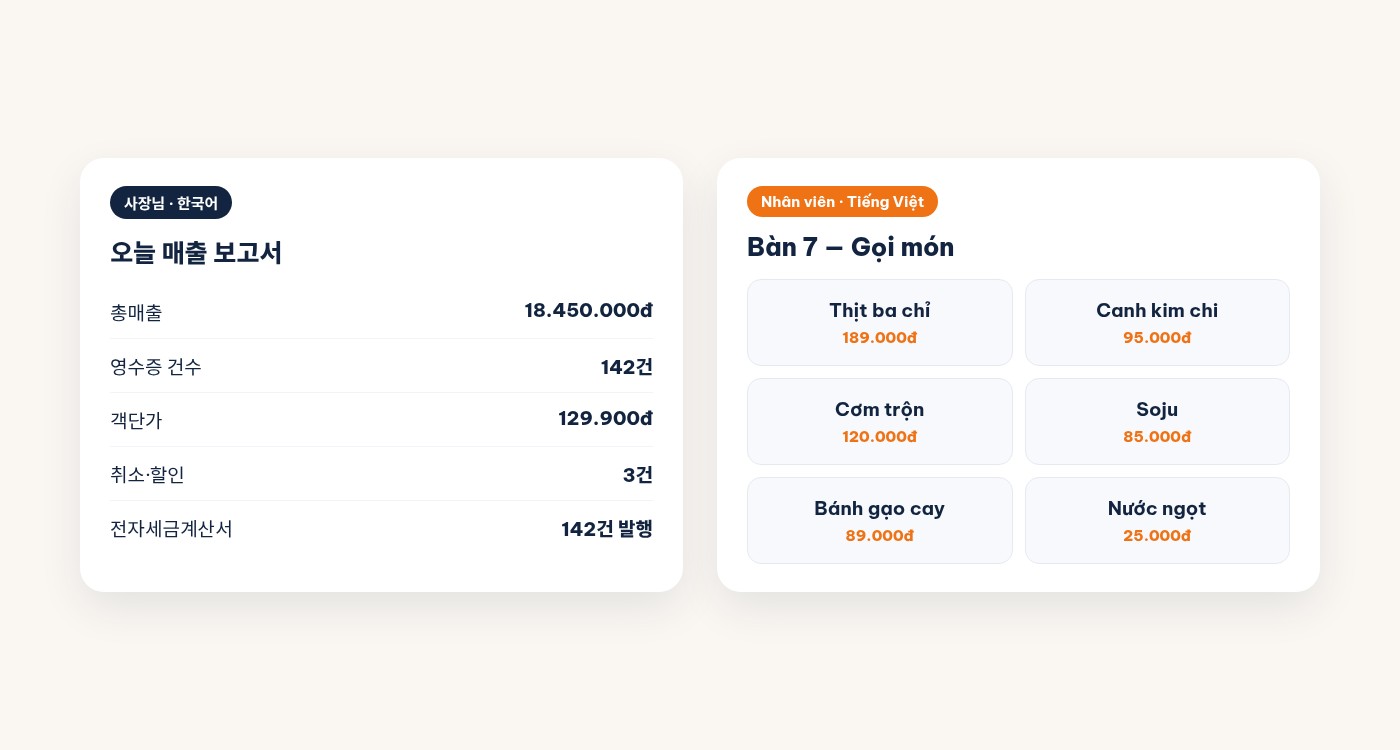
One shop, one set of data: owners and managers use the admin screens in Korean, local staff use the selling screen in Vietnamese. Vietnamese e-invoices are issued right at checkout.
Four things Korean owners run into when operating in Vietnam
Switch the selling screen to Korean and local staff make mistakes; leave it in Vietnamese and the owner cannot read the reports. What you need is not a full translation but a language per screen.
Household businesses with annual revenue of 1 billion VND or more selling directly to consumers must issue e-invoices generated from a cash register. Changing systems later is the most expensive path.
Travelling between countries or running two shops means long absences. The problem is not distrust of staff — it is having no way to check, so you find out late.
Foreign individuals face limits on registering as a household business. Using a Vietnamese nominee is common but offers almost no legal protection in a dispute. The formal investment route takes longer and is far safer.
Who sees which screen
| User | Language | Why |
|---|---|---|
| Owner, manager | Korean | Reports and settings must be understood exactly |
| Sales staff | Vietnamese | Local staff press the buttons every day |
| Kitchen tickets | Vietnamese | The cook has to read it at a glance |
| Receipts | Vietnamese | Includes mandatory tax wording |
Shops Korean owners most often run
Table ordering, add-on orders, tickets split by kitchen station, menu names kept in Korean and Vietnamese.
→ CafésSmall orders packed into peak hours, sugar, ice and toppings as buttons.
→ Korean marts, retailBarcode selling, expiry tracking for imported goods, shop and website sharing one stock.
→ Hair salons, nails, spasBooking by technician, remaining sessions on packages, technician commission calculated automatically.
→ Billiards clubsHourly or block billing, table lights switched on and off automatically.
→Three minutes a day on your phone, five numbers
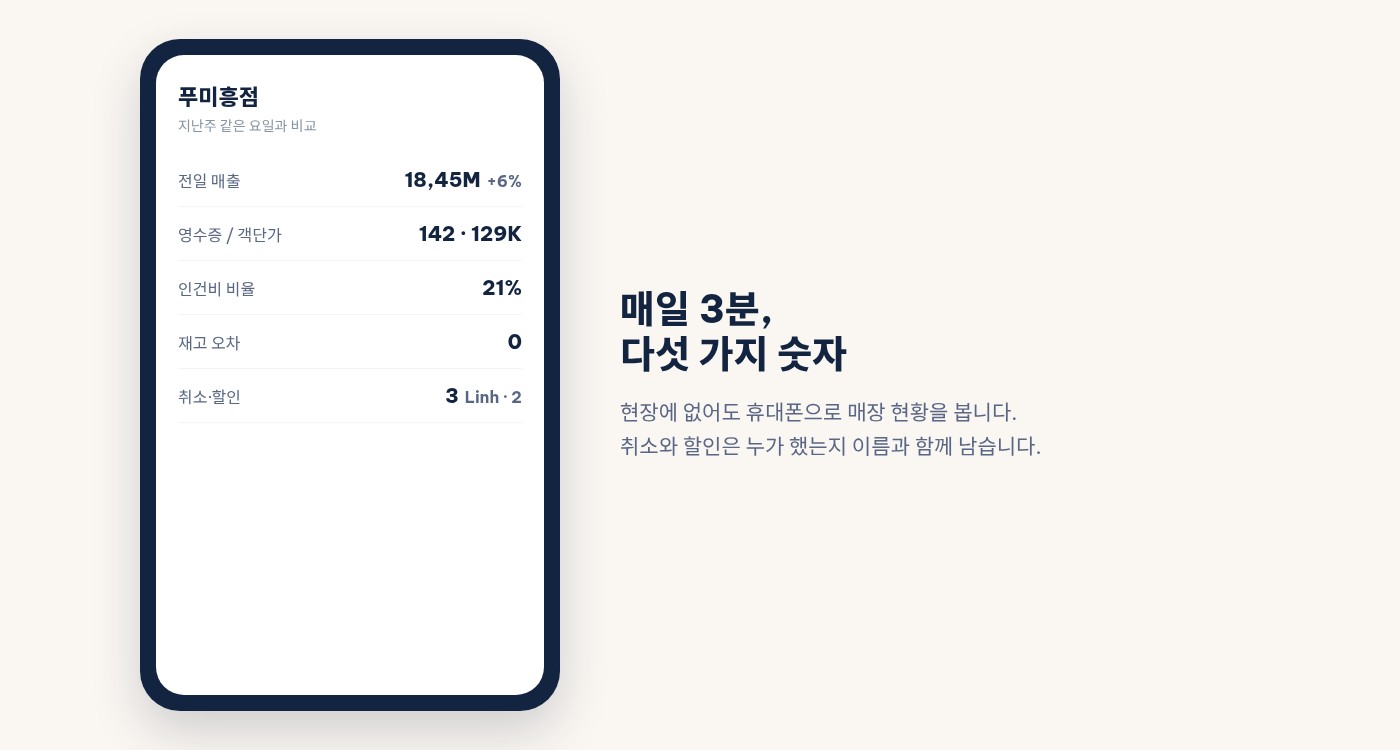
- Yesterday's revenue — compared with the same weekday last week, not the day before
- Number of receipts and average spend
- Labour cost ratio
- Stock variance on key items
- Voids and discounts — with the name of who did them
Simply knowing their name is recorded against voids and discounts changes how people behave in the shop.
Opening and running a business in Vietnam
- Opening a restaurant or café in Vietnam: licences in order
- E-invoices in Vietnam: who must comply and what to prepare
- Hiring staff in Vietnam: contracts and social insurance
- Managing your shop in Vietnam when you are not there
- The cost of opening a café or restaurant in Vietnam
- Choosing a POS with Korean language support in Vietnam
What Korean owners ask first
Can I use the admin screens in Korean?
Can it issue Vietnamese e-invoices?
How is installation and training done?
Can I see two or more shops together?
Can I take my data with me if I switch systems?
Is there a free trial?
Check whether it fits your shop
Tell us your industry and number of shops and we will suggest the right setup.
