



Many owners search for "free billiards management software" because they do not want to pay before knowing whether the software suits their hall. That caution is right: billing software runs every day, on every table, every shift, and switching after a wrong choice is exhausting. Rather than hunting for a free version, a safer route is to try the full version for a week, on real tables, at real hours, with real staff. This article suggests how to use the 7-day trial so that by the end of the week you have a clear answer: buy or not.
What the Ordersys billiards management trial includes
- Free for 7 days, all features. Not a cut-down version: table timing, drink orders, scorekeeping and reports are all open to try.
- No card needed. Signing up for the trial does not ask for a payment card.
- Setup support included. The Ordersys team helps with installation and shows your staff how to use it.
Seven days pass quickly without a plan. Below is a day-by-day trial schedule, one task per day, each with a "pass" condition so you do not judge by feel.
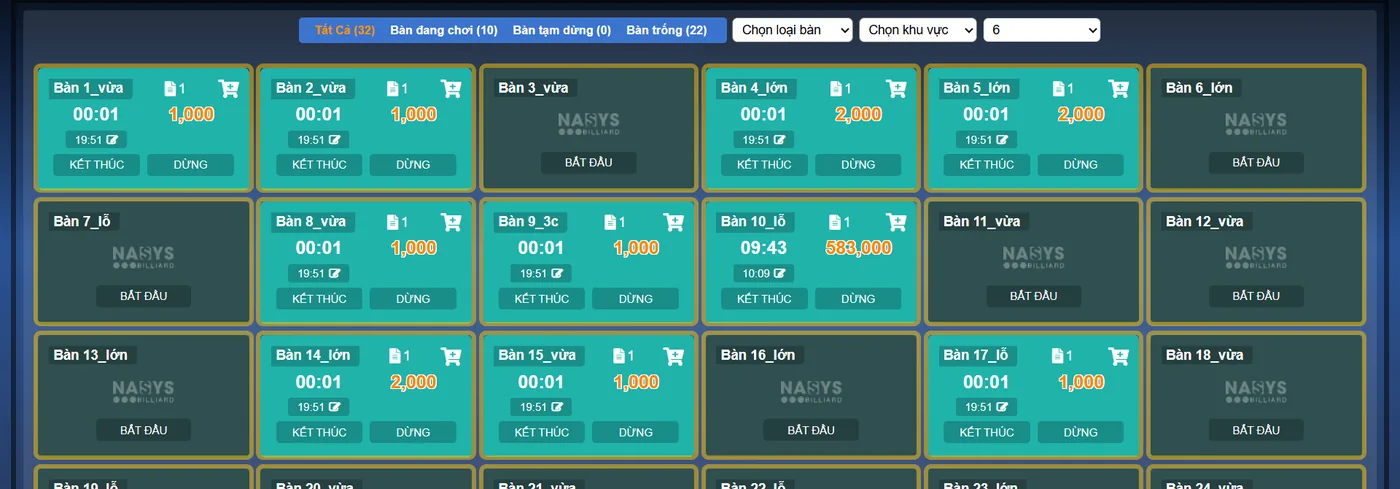
A 7-day trial schedule for a billiards hall
| Day | What to try | Passes when |
|---|---|---|
| 1 | Set up tables by area and type (pool, three-cushion, carom), hourly rates for weekdays, weekends and happy hours | A few tricky cases (play spanning two rate bands, play past midnight) come out exactly as your hand calculation |
| 2 | Let the cashier run one evening shift alongside the paper log: open tables, pause, move tables, merge tables, check running totals | At the end of the shift the table-time money on screen matches the log, and staff do not have to ask how to do things |
| 3 | Enter the drink and food menu; staff order by table, customers scan the table QR code to order themselves | Orders add correctly to that table's play-time bill, and nothing gets lost on the way to the counter or bar |
| 4 | Checkout, printing bills, putting regulars on credit, closing the shift | The cashier closes the shift without calling the owner, and the cash in the drawer matches the screen |
| 5 | Hardware you have or plan to install: table lights that switch on when a table opens and off when it closes, the scoreboard on a TV, camera highlight clips | You know exactly which devices the hall still needs and where they go, before spending money |
| 6 | Read the reports: revenue by table, by time band, by shift, by staff member | You can answer: which tables are quiet, which hours are slow, which shift sells best |
| 7 | A quick meeting with staff to list remaining sticking points | You have a concrete list of questions for the software provider before deciding |
Day 1 matters most. If the hourly rates are wrong, everything after them is wrong too, so run the test calculations in front of your longest-serving staff member, who knows where customers usually dispute the bill. The list of cases worth testing is in the article billing billiards by the hour for halls with many table types.
Four mistakes that waste a 7-day trial
- Testing with a few dummy tables. Set up three sample tables, open and close them, and you only see that the software works, not whether it fits your hall. Enter every real table.
- Only the owner tries it. The daily users are the cashier and the floor staff. If they find it confusing they will make mistakes later, even if the owner finds it easy.
- Avoiding busy hours. Any software looks fine when the hall is quiet. Run it at least one weekend evening, when many tables are open at once and customers keep ordering.
- Skipping the shift close. Billing each table correctly is not enough; at the end of the shift you must be able to close cash, bank transfers and regulars' credit without adding up by hand.
Questions to ask before buying
- Will the tables, rates and menu entered during the trial be kept when you buy, or do you have to enter them again?
- Can the POS machine, printer, TV and cameras you already have be reused, and what else needs buying?
- If the hall must issue e-invoices, how does it connect to the e-invoice provider?
- If you open more branches later, can reports be gathered in one place?
- If the system fails at 11 pm, who do you call, and who answers?
For what it costs after the trial, read how much billiards management software costs. If the hall is newly opened, also see what to install before opening day.
Sign up for the Ordersys billiards management trial
Per-table timing with multiple rate bands, drink orders and table QR ordering, table light control, scoreboards, camera highlight clips, livestreaming and reports by table and by shift are all part of Ordersys billiards hall management software. Sign up for the 7-day free trial right on the product page, or message us on Zalo or call 090 750 1000 for help setting up your tables and hourly rates.
Ordersys times every table automatically, switches table lights, takes drink orders at the table and reports revenue per shift.
Other news
How to manage a cafe or small restaurant remotely by phone: what to check each day, and when
Remote management is not watching staff on camera for hours; it is knowing how many times a day to open your phone and which numbers to read. This article gives a concrete daily schedule for cafe and restaurant owners using Ordersys: end-of-day report, shift close report, orders, stock and multiple branches, plus the numbers worth a call right away and what the venue must record.
QR payment with automatic reconciliation: reading the shift close report so the money matches
When a venue takes many transfers, the drawer holds only part of the revenue. This article walks through the Ordersys shift close report money stream by money stream: cash, bank transfer, card, auto QR and debt; which lines the software already matched, which the cashier must check item by item, orders paid two ways, orders tapped with the wrong method, and the order of reconciliation before closing the shift.
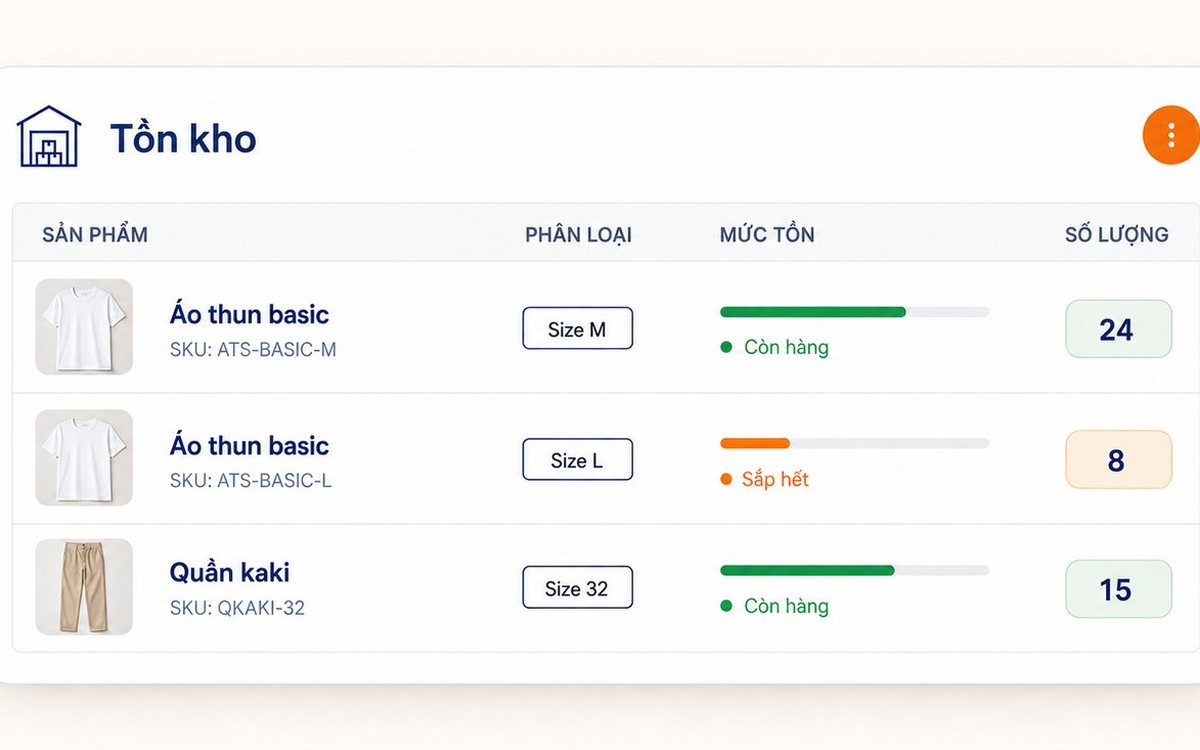
Inventory and stock software for retail stores: every item in and out has a document
When the stock on screen does not match the shelf, the software rarely miscounted; goods left or entered the stockroom without being recorded. This article follows an item through a retail store: opening stock, two-step purchase receipts (incoming first, then received into stock), instant deduction on sale, branch transfer slips, supplier returns, approved adjustments, the In–Out–Balance report and stock limits.
Ordering software for takeaway cafés: fast to-go orders, no mixed-up cups
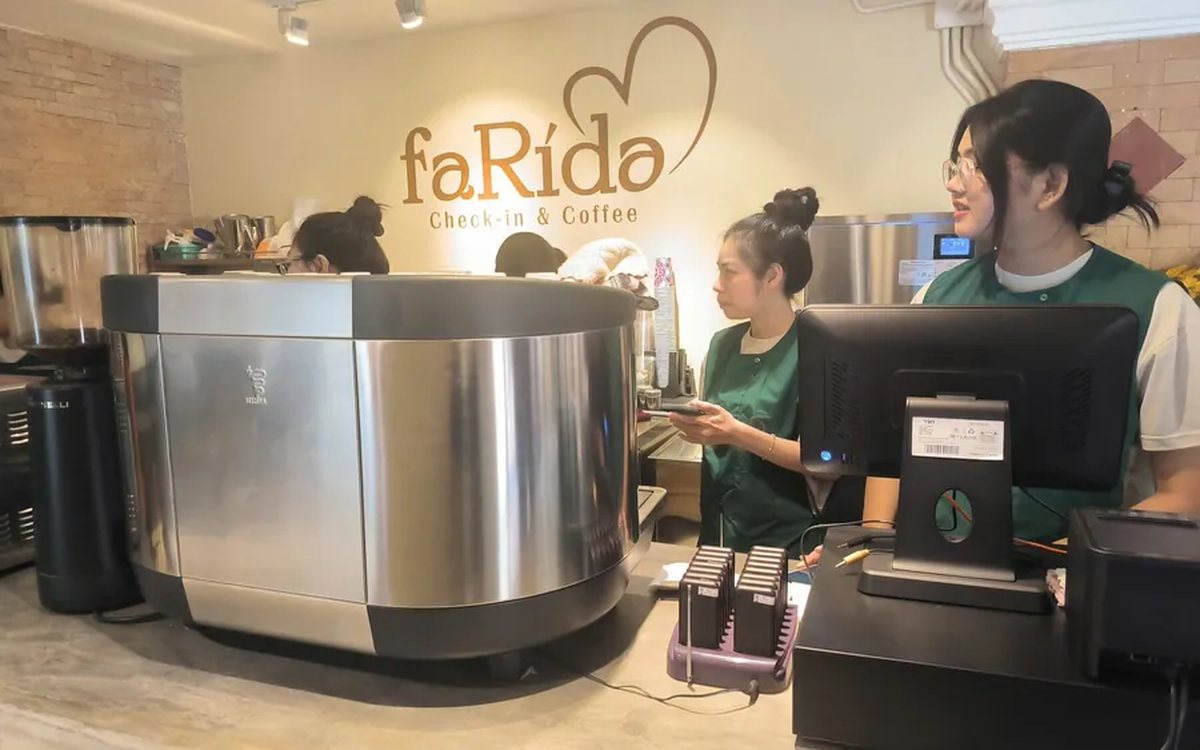
A takeaway café does not lose time at the espresso machine but in four steps at the counter: typing option notes, customers changing their mind late, waiting to check transfers and handing over the wrong cup. This article shows how ordering software fixes each step: size, sugar, ice and toppings as buttons, a customer display to confirm before the cup is made, a payment QR in the total box and a numbered label for every cup.
Automatic payment confirmation: customers scan VietQR or MoMo and the order closes itself
At busy times, cashiers lose the most time hunting for bank transfers. This article explains automatic payment confirmation in ordering software for restaurants and cafés: how it differs from a regular transfer QR, what happens from the moment a customer scans VietQR (BIDV), MoMo or VNPay until the order switches to paid, what runs automatically afterwards (receipts, stock deduction, member points) and when the software deliberately does not close the order.
Sharing great billiards shots with customers over Zalo and social media
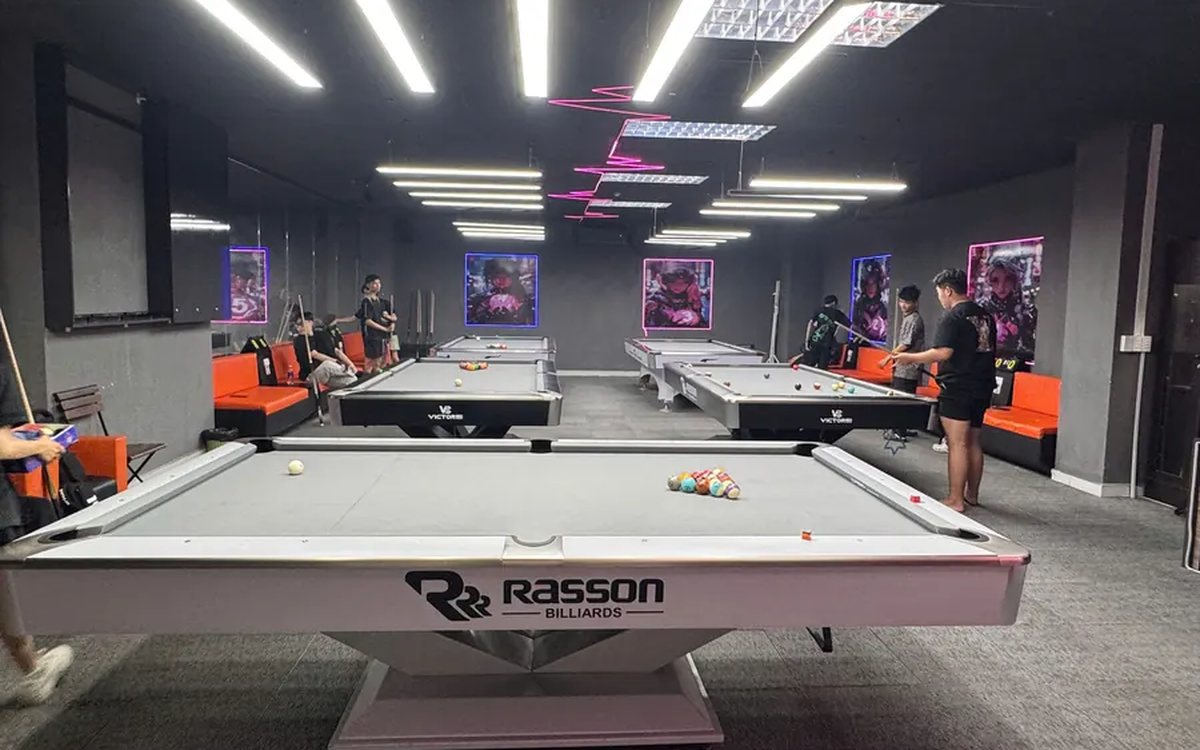
A clip of a great shot is something players want to keep, and the club gets mentioned every time it is passed on. This guide shows billiards club owners how to make sending highlights to customers over Zalo a counter habit: where clips come from, five steps to pick, preview, download and send, when to let customers scan a QR code to get clips themselves, and how to post on the club's fanpage while keeping customers comfortable.
Sales software for household businesses that fits the new rules
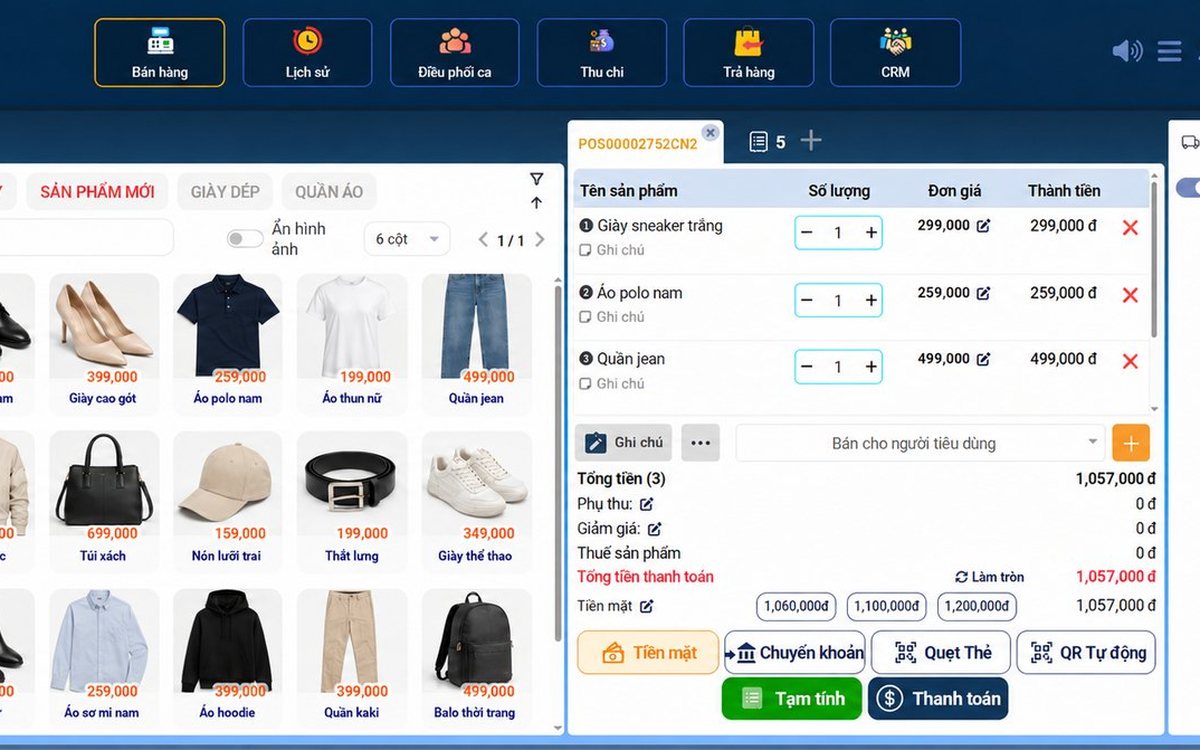
From 2026 household businesses no longer pay presumptive tax and declare based on actual revenue; stores with revenue of 1 billion VND/year or more selling directly to consumers must use e-invoices generated from cash registers. This guide summarises the regulatory milestones that affect retail stores and what sales software must do: record every order, issue e-invoices, report by period, keep purchase records and track debts.
Scan a QR code to order at the table: guests order for themselves, the restaurant needs fewer staff
When guests scan a QR code to order at the table, handing out menus, taking orders, running tickets to the kitchen and answering "where is our food?" move to the guest. This guide separates what guests do themselves, what staff still have to do, how to rearrange shifts by table zone, and where things slip when the restaurant runs with fewer people.
Ordering software for wedding banquet restaurants: serving many tables at once without the bill going wrong
A thirty-table wedding banquet usually goes wrong on the extras: drinks added mid-party, tables set up at the last minute, dishes sent to the kitchen twice, deposits remembered by word of mouth. This guide puts the whole banquet into one order from a multi-table booking or by merging tables, takes extra orders by phone, sends only new items to the kitchen, and settles with the host using a provisional bill, surcharges and automatic deposit deduction.
