



Seven in the evening, and the restaurant is out of fish. On the printed menu the fish dish is still there, and it is still there on the phone of the customer who has just scanned the QR code. The customer orders, the kitchen accepts and only then says it is finished, and staff have to go to the table, apologise and ask the customer to choose something else. A digital menu solves this without reprinting anything, but you need to use the right switch: the software has several ways to stop a dish being ordered, and each does something different.
Three ways to stop customers ordering a dish by QR
| What you do | Effect | Use it when |
|---|---|---|
| Turn off the dish's Order via QR code switch | The dish disappears from the QR page, but this switch does not affect staff selling screens | The dish has temporarily run out for self-ordering, or you only want staff to advise on it before selling |
| Turn off the dish's status | The dish is no longer active and does not appear on the QR page | The dish is off sale for a while, for example a seasonal item. Its information stays so you can turn it back on |
| Turn on Do not allow sales when out of stock in the warehouse settings | If a dish tracked by stock or recipe does not have enough stock, the QR page fades it automatically and shows Sold out in place of the add button | Bottled goods, countable items, or venues that have entered full recipes and receive stock regularly |
The first two are manual actions by a manager; the third runs on warehouse figures.
Changing prices: change in one place, every screen reads it
The QR page takes its selling price from the same place as the cashier and staff screens, so customers will not see one price while the counter charges another because someone forgot to update a screen. There are two things to remember when changing a price:
- If you use price lists, change it in the price list. A dish with its own price in a price list uses that price instead of the base price. Edit the base price while the price list still has the old figure, and the price customers see does not change.
- Dishes already ordered keep the price at the time of ordering. The price is stored on each order line, so changing it mid-service does not alter what was already on an order. Customers with the page already open reload to see the new price. It is still best to change prices outside peak hours.
The kitchen's Sold out button does a different job
Many venues assume the kitchen pressing Sold out is the end of it. In fact this button deals with portions already ordered: the portions that cannot be made are cancelled from the order and the amount is deducted, and the cashier and staff get a notification that the dish has run out and no more orders are accepted (if the venue has this notification type on).
That button does not change the QR page. Unless the venue has turned on the stock block, customers at other tables still see the dish and can still order it. So a second step is needed after the kitchen reports it.
A three-step routine for busy hours
- The kitchen presses Sold out as soon as it runs out, without waiting for the next order. The notification reaches the counter and staff know to tell customers who have ordered it.
- One person is assigned to turn the dish off on QR. Usually the cashier, who has the screen at hand and receives the notification. Say clearly who it is, or everyone will assume someone else has done it.
- Turn it back on at the start of the next shift. When stock arrives, switch the dish on. Put this on the opening checklist, because nobody will remind you about a dish left off.
Turning on the stock block: check before you trust it
The third way is the most convenient because nobody has to remember anything, but it is only right when the warehouse figures are right. Stock entered short means a dish that is available shows as Sold out. A prepared dish that has a recipe created but no ingredients entered is also treated as out. After turning it on, open the QR page on a phone, scroll through the whole menu and see which dishes are faded. For any faded dish the kitchen can still make, fix the recipe or the receiving note before customers see it.
The QR menu, kitchen screen and recipe-based stock are part of Ordersys ordering software. You can try it free for 7 days: create a table, turn off a dish as a test, then scan the code with your own phone to see what customers see.
Further reading: Printing table QR codes: what size, where to stick them, and whether a menu change means reprinting if you are preparing your codes; and When customers order the wrong dish by QR: how to confirm and cancel for other situations with self-ordering.
Ordersys has editions for restaurants and for retail stores: checkout, stock, reports and e-invoices, with on-site setup and training.
Other news

Tracking spa appointment status: arrived, late or cancelled
The hard part of spa appointments is not writing them down but knowing what state each one is in right now. Six statuses and what reception should do at each, how to handle no-shows, and how to cancel and undo bookings while deposits still match the cash book.

Transferring a billiard table: keep time played and items ordered, charge each table correctly
Guests switching tables mid-session is routine at a billiard hall. Press Transfer table and the time played closes at the old table's price, further time runs at the new table's price, and ordered items travel with the bill. This article shows how the bill looks, when a transfer is not possible and where the owner can review it.
Pharmacy and grocery software: barcodes, expiry dates, fast selling
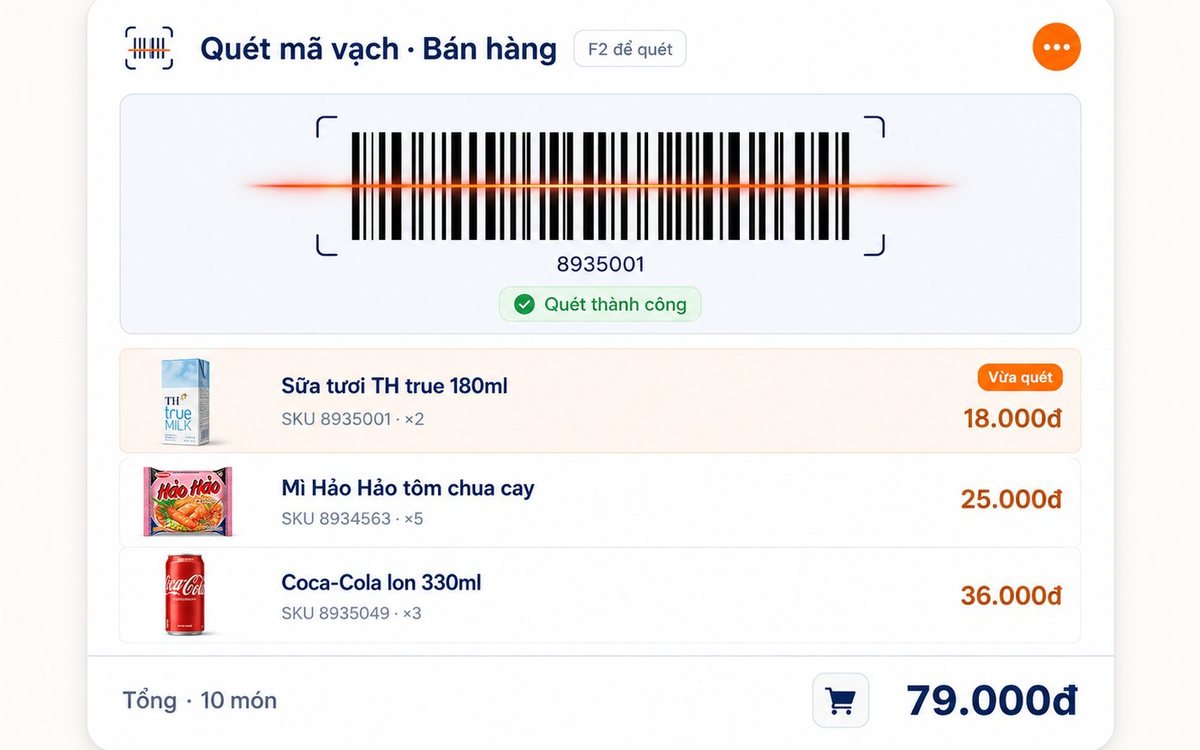
Pharmacies and grocery shops struggle the same way: many items, small values, a customer waiting, and stock with expiry dates. Barcode selling, lot and expiry travelling with the goods from receipt, case-to-box conversion, stock levels — and one point pharmacies should ask about before choosing software.
Paying part-time staff by the hour in restaurants and coffee shops
Monthly salary does not fit part-timers on four or five-hour shifts with a roster that changes weekly. The four things to set up properly — shifts, attendance, the hourly rate, the closing cycle — and why worked hours must come from attendance rather than from the roster.
Massage shops: booking rooms, beds and therapists without overlaps
Two customers on one bed is the kind of mistake that loses guests quietly. The three sources of overlap in a massage shop, how the software blocks bed conflicts using start time plus duration and a buffer on both sides, what the machine guards and what people still have to, and four rules to agree on before switching on.

Bakery management software: production recipes, expiry dates and cakes ordered for a pickup date
A bakery is a small workshop stuck to a shop, so software that only sells still leaves the owner guessing how much flour went into a batch. Declare baked goods as produced items with recipes, sponge and cream as semi-finished goods, receive materials by lot with expiry dates, sell at the counter with barcode labels, and keep every advance cake order in one place.
Software for a hotpot and grill house: building the menu, splitting the kitchen, what to set up before you open
Guests order five or six rounds over two hours, the kitchen runs three stations, and tables turn over once or twice a night. Those three traits decide what to configure in the first week: hotpots and broth flavours as attributes, meat plates by recipe quantity, buffet seats, kitchen and bar printers by product group, advance bookings with a code, and closing the shift at night.
Filling off-peak hours with student groups: attach the offer to the person, not just the hour
Cutting the price for a whole afternoon band also discounts the people who were coming anyway. To aim at the group you are missing, the offer has to attach to a person: membership cards and tiers, three preset rates — Regular, Student, Other — and a capped group combo limited by weekday and time window. Plus three guards so the discount does not leak.
HRM software for restaurant and cafe chains: splitting the work with each outlet
By the third location, three Excel files on three computers no longer answer how many people the chain employs or what it spent on staff last month. One shared record that travels with the person, a table splitting duties between owner and outlet manager, permissions by store, rules configured per branch, and labour cost broken out by outlet.
