



Many shops buy a fingerprint time clock because they are tired of staff clocking in for each other. Once the device is installed, buddy punching does drop sharply, because nobody can lend their finger to someone else. But at the end of the month the owner still spends a whole evening plugging in a USB stick to pull the data, opening an Excel file, checking person by person who was late on which day and who worked overtime, then typing it all again into the payroll sheet. The device only records punch times. To turn punch times into a timesheet and a payroll, the device has to be connected to HR software.
What a fingerprint device does, and what needs software
| Task | Fingerprint device on its own | Device connected to software |
|---|---|---|
| Stop buddy punching | Works: it needs that person's actual finger | Keeps this advantage |
| Know who is late or leaves early | Only has punch times, does not know which shift the person works | Punch times are matched against the scheduled shift |
| Split shifts, half days | Several punches a day, pieced together by hand | Recorded by shift, including split shifts and half days |
| Missed punch, finger not recognised | Edited in a file, nobody knows who changed it | Every edited line stores who changed it and when |
| Payroll | Numbers copied into the payroll sheet, easy to miss something | Hours are already totalled; pay is calculated by hour, shift or month |
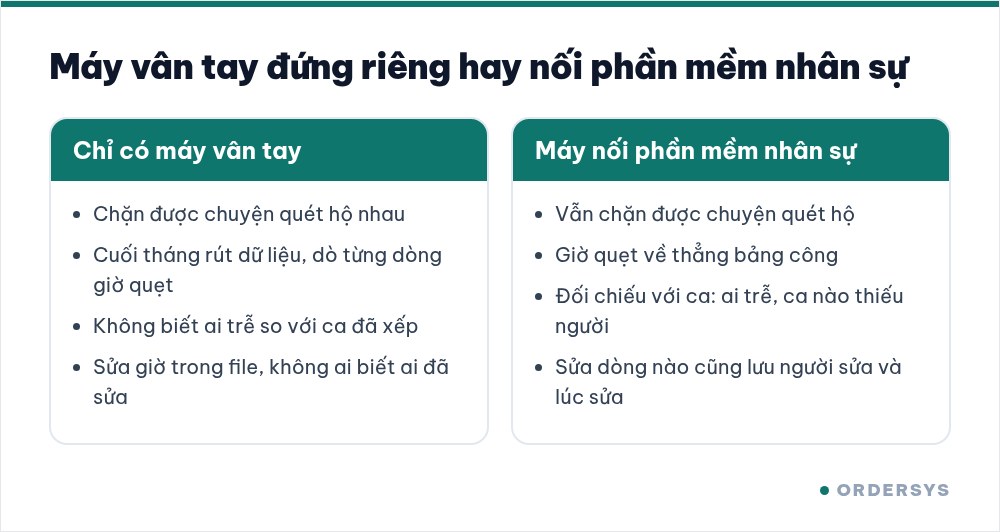
From a finger on the scanner to a payslip
Once the device is connected to Ordersys HRM, four steps repeat every month:
- Clocking in. The employee places a finger on the device and the time in is recorded for the right person. The system matches it against the scheduled shift and shows straight away who is on time, who is late and which shift is short-staffed.
- During the shift. Swapping shifts, leaving early and staying for overtime are recorded together with the person who approved them at that moment, instead of being remembered at the end of the month.
- Closing the timesheet. At the end of the period the timesheet is already built from the whole month's punches. The manager only reviews the unusual lines and approves, instead of adding everything up from scratch.
- Paying wages. The software totals the hours, adds overtime, deducts late arrivals and early departures, and adds allowances. Each payslip separates every item, so staff can see where the final number comes from.
Five things to do before buying a device
- Ask the software provider first, buy the device second. Tell them which model you plan to buy so they can check that it connects. Asking after you have bought it can leave you running two systems side by side.
- One code per person, matching the employee profile. The code on the device and the code in the software must be the same. When someone leaves, delete their fingerprint from the device on their last working day.
- Register two fingers for each person. Wet, greasy or scratched fingers are often not recognised. Kitchen staff should clock in before washing their hands and going into the cooking area.
- Put the device at the staff entrance, not at the cashier counter. Staff clock in when they arrive instead of squeezing in while customers are paying.
- Check the device clock. If the device runs a few minutes off, the whole shop gets marked late. Look at the time on the device once at the start of each month.
When the device does not recognise a finger, or someone forgets to punch
This happens every month. Do not let staff write their own times in a notebook for the owner to re-enter at the end of the month. Ordersys allows controlled manual time entry: the manager records the time in and out for that person, and for every edited line the system stores who changed it and when. If there is a question at payday, both sides open that exact line instead of arguing from memory.
Shops whose staff move between several locations, or small shops not ready to invest in a device yet, can use QR code clock-in alongside the fingerprint device. Both methods record into the same timesheet.
Clock-in by device, by QR or manually, shift scheduling, shift swaps with an approver and automatic payroll are all part of Ordersys HRM software, with a free 7-day trial. A comparison of QR and fingerprint and the levels of protection against buddy punching is in the article QR code time attendance: how it works and how to stop buddy punching. Before payday, double-check with the article where month-end payroll usually goes wrong.
Clock in by phone and calculate pay by shift, allowances and overtime automatically every month.
Other news
Selling set menus and meal combos in a restaurant: setting them up so the kitchen, stock and counter agree
Set up a set as an ordinary dish and the kitchen does not know what "Set B" contains, stock does not deduct ingredients, and swaps are edited by hand at the counter. How a set menu differs from a combo, how to set up dish groups, default dishes and extra charges, and what the kitchen, the bill and stock see when a combo is sold.
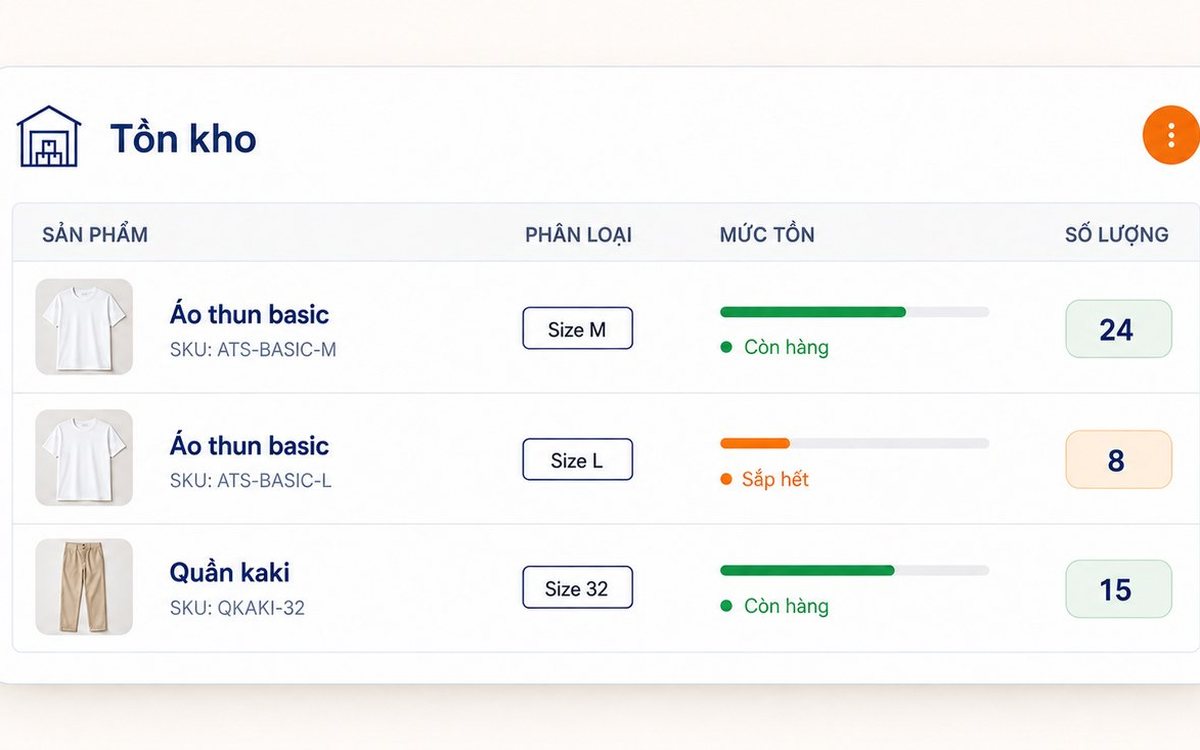
Unit of measure conversion: buy by the case, sell single items and keep stock accurate
When the stock book counts cases and the counter counts pieces, the two numbers cannot be compared at month end. Three ways of setting up items that throw stock off, how to set up unit conversion in the software, receiving by the case while stock counts in cans, and a few rules worth agreeing on in the stockroom.
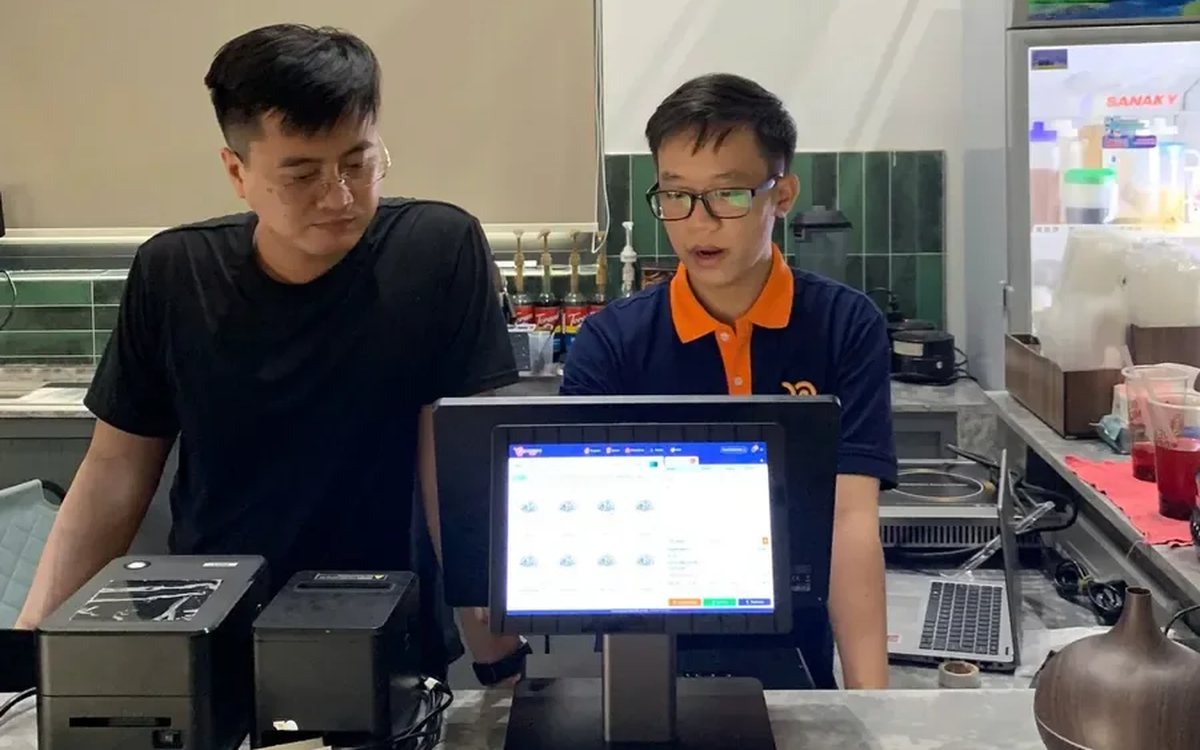
Coffee shop shift handover: closing the shift, reconciling cash and taking over cleanly
A rushed handover of one sentence, "there's about two million in the drawer", means that when the cash is short at night nobody knows which shift it came from. Three things to settle at handover, five steps to close and open a shift in the software, what the shift details show the owner, and a few rules worth posting at the counter.

Revenue reports by stylist at a hair salon: how to read them fairly
A revenue-by-stylist table is easily read as a ranking, yet stylists on the evening shift, those taking colouring and perming, or shampoo assistants have very different numbers. Where the data comes from, which column answers which question, how to compare fairly, and using the report to finalise commission, assign customers and train staff.
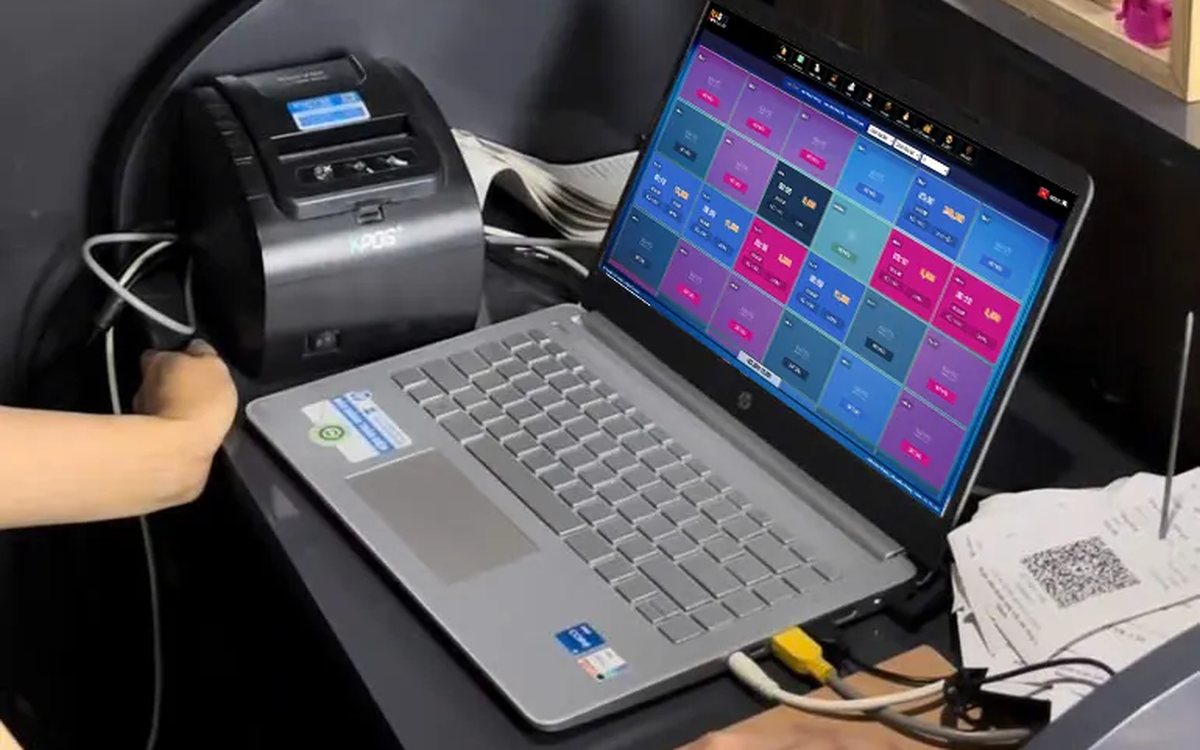
Showing the running total for a billiards table in play: give customers the right number before checkout
When customers ask "how much are we at?" and staff do the sum in their head, the bill at payment often differs and arguments follow. Two ways to see the running total in the software, what the provisional invoice includes, when the number still changes, pausing with a trail, and logging items added after an interim print.

Managing tips for karaoke room servers: recording and sharing them transparently
Karaoke guests tip in cash, by adding to the bill or by overpaying a transfer. The last two pass through the venue's fund, and if nobody records them, suspicion follows. Three kinds of tips and where the money sits, individual or pooled tips, recording tips at payment, and paying them out at shift end transparently.
Duplicate customers in your list: how to merge them without losing history
One customer with three profiles means points split three ways, never reaching a higher tier, and reports counting them as new customers. Five sources of duplicates, the signs to look for, how to merge while keeping purchase history and loyalty points, and counter habits that stop duplicates from the start.

Booking deposits for nail salons in peak season: who to ask, what to say, where the money goes
In peak season, every missed booking wastes a prime time slot of your best technician. Which bookings need a deposit and which do not, three things to say when you take one, which technician it holds, and how the deposit moves through the software so the cash fund still matches at the end of the day.
QR digital menu: change prices and hide sold-out dishes without reprinting
A QR menu can change right away without reprinting, but you need the right switch. Three ways to stop customers ordering a dish by QR, whether a price change affects dishes already ordered, what the kitchen's Sold out button really does, and a three-step routine for busy hours.
