Any massage shop that has been running for a while ends up selling cards: a guest tops up an amount and draws it down, or buys a ten-session package and comes every week. The money arrives once, the work spreads over months. That is where the mess starts — the notebook at the counter records how many sessions a guest has left, the therapist finishes in the room, comes out while the receptionist is busy, and forgets to tick it off. A few times like that and the number in the book no longer matches reality, with nobody knowing which day the gap opened.
How a stored-value card differs from a treatment package
Both are casually called "a card", but they are drawn down differently, so they have to be set up differently:
| Stored-value card | Treatment package | |
|---|---|---|
| The guest pays upfront | An amount of money | A number of sessions of a specific service |
| Each use deducts | The price of that day's service | One session, regardless of price |
| Suits | Guests who switch services often, or come with friends | Guests following one treatment regularly |
| The owner tracks | The remaining balance | Sessions still owed to the guest |
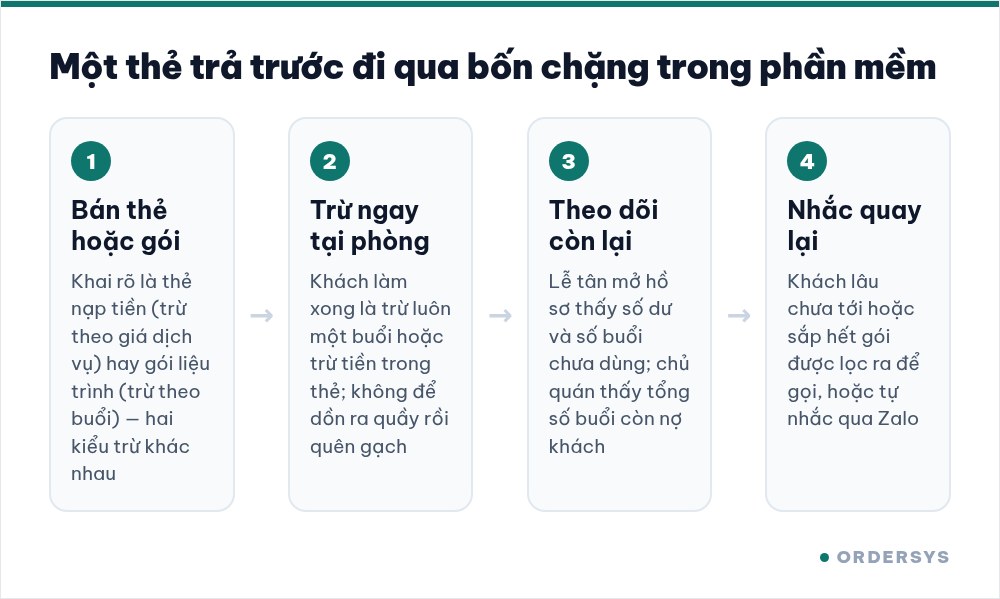
Deduct in the room, not at the counter later
In Ordersys, as soon as a massage guest is finished the session is deducted — one session off the package, or money off the card at the price of the service just performed. The receptionist does not have to remember, the therapist does not have to remind anyone. Drinks or extra services the guest adds go onto the same ticket, closed as a single bill when they leave, with what came off the card and what was charged on top both shown clearly.
When the guest arrives, the receptionist opens the profile and sees immediately how much is on the card, how many sessions are left, what service was done last time and by which therapist. The guest does not have to repeat it, and nobody has to rely on the memory of whoever is at the counter today.
Two numbers the owner must look at separately
Money from card sales today is not money earned. Selling a ten-session package brings in the full amount, but the nine remaining sessions are therapist hours and supplies you will spend over the coming months. The software records each session when the guest actually uses it, so the monthly report reflects work done rather than money collected. The owner sees both at once: the amount received and the sessions still owed, converted into the matching value.
- A month with many cards sold but few guests coming in: money arrives, but the work piles into next month.
- A month with few sales while old guests keep coming to use sessions: little money in, yet it is the busiest and most costly month.
- Read either one wrongly and decisions about hiring or running a promotion will be off.
Remind guests before they forget
A guest with three sessions left who has not been back for two months is a guest about to be lost. The system can filter that list for the receptionist to call, or send a Zalo reminder automatically. Cards and packages running low also raise a warning, so a new package is offered while the guest is still engaged rather than after they have drifted away. Therapist commission is calculated on sessions performed or on card sales, with a breakdown per person, so selling an extra package is clearly credited.
Tidy the old numbers before you switch
If the shop already has a few dozen guests holding cards, do not rush to enter everything at once. It is cleaner to close off the balance and remaining sessions as of a given date, have guests sign off on the list, then enter exactly those figures. From that date on, every deduction lives in the software. It costs one working session, and saves you running two books in parallel.
Prepaid cards, treatment packages, room-based scheduling and therapist commission are part of Ordersys massage shop management software, with a free 7-day trial. Read more: managing treatment packages: sessions left and unearned revenue and commission and tips for massage therapists.
Manage appointments, session-based treatments, client records and technician commissions in one app.
Other news

Managing employment contracts: renewal reminders and employee files
End of probation, contract expiry, documents lapsing — dates that come once per person and slip past easily. One file per employee with documents and expiry dates, and notice before each date arrives.

Billiards club cameras: matching tickets against table footage
The action history tells you which table, what time, who opened or cancelled; the camera on that same table shows what actually happened. Put the two side by side and a check takes minutes.

Food and drink combos per room for karaoke venues
A fixed set or a combo the guest picks from, ordered as one line instead of five, with kitchen and bar receiving the right items and the combo landing on the same bill as the room time charge.

Grouping VIP customers so offers reach the right people
Total purchases, remaining points, tier, customer group, outstanding debt, date of birth — the columns already in your customer list are enough to split groups. Tiers handle regulars; vouchers handle the ones who stopped coming.
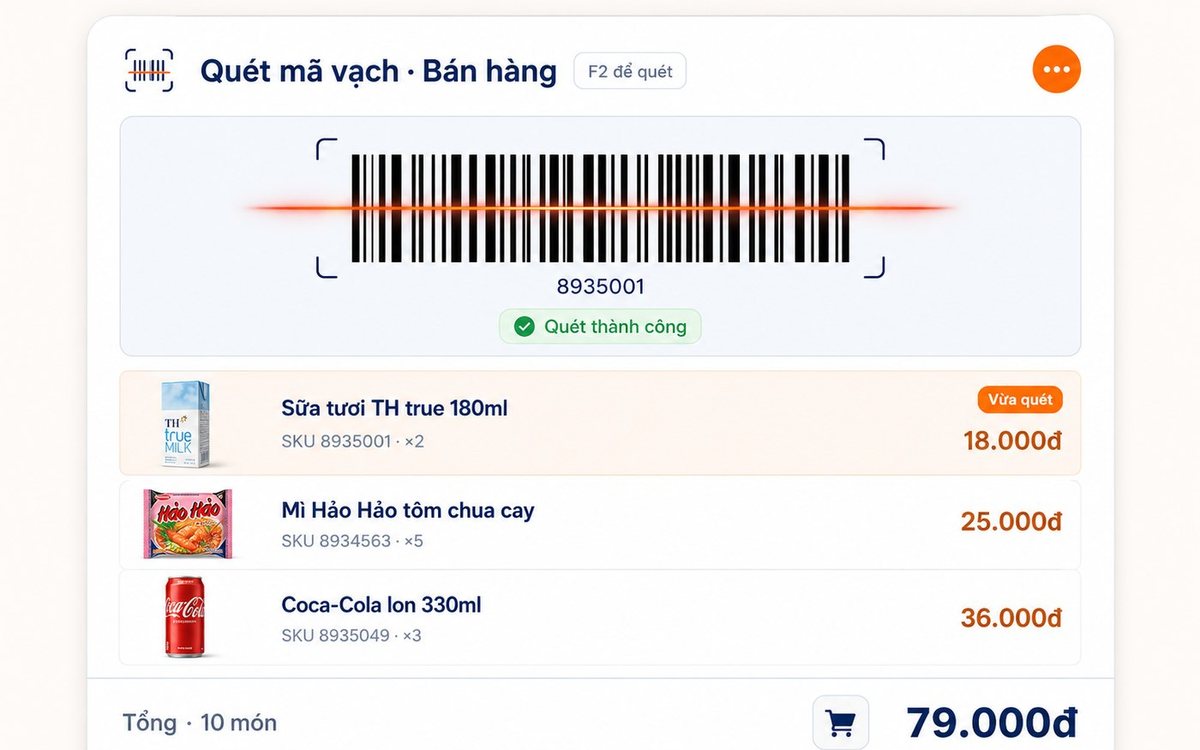
Printing barcodes and price labels in batches for retail shops
Pick the items, set the paper size and the code standard (Code 128 / EAN-13 / UPC-A), test-print one or two, then run the batch — or print straight from the purchase slip with label counts taken from the quantity received.